











Autonomous AI Agents · O'Reilly RL Book Authors

Enterprise AI Agent Development Services

The specialist AI agent development consultancy for enterprises. We design, build and ship autonomous and multi-agent systems for production, with the monitoring, retries and fallback workflows that real operations demand. Trusted by Google, Microsoft and Stability AI, delivering AI agents since 2013.

Start your AI agent engagement now

Talk to the AI agent engineers

Tell us about your AI agent project, single-agent prototype, multi-agent orchestration, RAG knowledge agent or full enterprise deployment, and we'll tailor an approach. Typically two to four weeks from first call to kick-off.

2013
Building autonomous AI systems since 2013, one of the longest-running AI agent practices in industry.
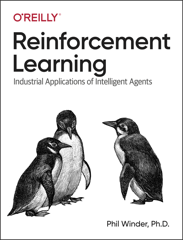
Reinforcement Learning: Industrial Applications of Intelligent Agents (O'Reilly)
Authors of the O'Reilly book on industrial autonomous agents and reinforcement learning.
Temple University Beasley School of Law
RAG agent for scientific legal mapping at Temple University's Center for Public Health Law Research.
4×
multi-cloud delivery: AWS, Azure, GCP and on-prem Kubernetes for production AI agent deployments.
What you get

What an enterprise AI agent development consultancy actually delivers

An AI agent development service turns a large language model into a reliable, tool-using software system that performs real work. That means custom AI agent design, tool integration, multi-agent orchestration, evaluation, guardrails, observability and the fallback workflows that production demands. Winder.AI delivers end-to-end AI agent development as one engagement, strategy, custom agent build, multi-agent orchestration and ongoing operations, by the same senior engineers who shipped production AI for Temple University, Google, Microsoft and Stability AI. We are framework-agnostic across LangChain, LangGraph, PydanticAI, CrewAI and AutoGen, and we ship working agents, not slide decks.

How we compare

How AI agent development companies compare

Provider typeWhat they deliverBest forMain weakness
Big-4 / global strategy consultancyAgentic AI strategy decks, roadmaps, large delivery teamsMulti-year transformation programmesHands-on agent engineering offshored or thinly staffed, weak on production reliability
Generalist AI agencyBroad AI capability with agent work as one offeringSingle-LLM chatbot prototypesShallow agent bench, weak on multi-agent orchestration, evaluation and guardrails
OpenAI / Anthropic solutions teamReference implementations on the vendor's models and toolingAdopting a single model providerLock-in by design, weak on open-source models, multi-cloud and on-prem
No-code agent builder vendorTheir drag-and-drop platform, plus implementation services around itInternal proofs of concept with simple workflowsHits a ceiling fast on complex tool use, custom integrations, evaluation and observability
Specialist AI agent consultancy (Winder.AI)AI agent strategy, custom agent development, multi-agent orchestration and ongoing operations, delivered by senior AI engineersEnterprises that need production AI agents with monitoring, retries and fallback workflows, multi-cloud, framework-agnosticBoutique scale, not designed for 100-seat staff augmentation
From strategy to production

AI agent consulting, custom development and multi-agent orchestration

Winder.AI is the AI agent development partner for enterprises that need autonomous systems to run in production, not in a notebook. Our AI agent services span strategy and architecture, custom agent build, and multi-agent orchestration, the full lifecycle, by senior engineers who have shipped autonomous AI since 2013.

AI Agent Consulting & Strategy

Use-case discovery, agent architecture, framework selection and a delivery roadmap. We isolate where autonomous agents will actually pay back, prioritise opportunities, and recommend the right stack across LangChain, LangGraph, PydanticAI, CrewAI or native tool use. Part of our broader AI consulting practice.

Custom AI Agent Development

Hands-on AI agent engineering: tool-calling agents, RAG knowledge agents, evaluation harnesses, guardrails and the monitoring, retries and fallback workflows that production demands. We have shipped agent systems for clients including Temple University. We are engineers first, which means working agents, not architecture diagrams.

Multi-Agent Systems & Orchestration

Design and delivery of multi-agent platforms where specialised agents collaborate behind an orchestrator. We build hierarchical and federated architectures for project management automation, autonomous sourcing, research-and-report pipelines and operations co-pilots, with scalable observability and clear separation of concerns.
Lindsay Cloud logo

We sought AI engineering experts that could quickly learn our day-to-day scientific legal mapping processes enough to develop a tool to make our work more efficient. Winder.AI dug into our day-to-day workflow to thoroughly understand the value of an AI Assistant for scientific legal mapping, which is a critical process to the field of legal epidemiology.

Lindsay Cloud
Deputy Director, Center for Public Health Law Research at Temple University's Beasley School of Law
Why hire an AI agent consultancy

The enterprise AI agent development partner

A decade-plus of autonomous AI in production, framework-agnostic delivery and a senior engineering bench, not a sales layer.

01

Autonomous AI Since 2013

We have been building autonomous AI systems for over a decade, long before the agentic AI hype cycle. As authors of the O’Reilly book on industrial autonomous agents and reinforcement learning, we know which agent architectures survive contact with production and which collapse on first incident.
02

Production-Grade Agent Engineering

Every agent we ship is designed for production from day one: structured output schemas, evaluation harnesses, guardrails, observability and tracing, retries and fallback workflows. Multi-cloud delivery across AWS, Azure, GCP and on-prem Kubernetes, including air-gapped environments.
03

Senior AI Engineers, No Sales Layer

You talk to the engineers who will do the work. No offshore handover, no junior squad behind a senior pitch. The team that scopes your AI agent engagement is the team that builds, ships and operates it.
Trusted Worldwide

Trusted by global organisations for AI agent development

Production AI agents delivered across legal, finance, technology, manufacturing, energy and regulated public services.

/logos/temple-logo.svg/logos/google.svg/logos/microsoft.svg/logos/stability.svg/logos/oreilly.svg/logos/lightning.svg/logos/modzy.svg/logos/pachyderm.svg/logos/protocol-labs.svg/logos/canonical.svg/logos/shell.svg/logos/ofcom.svg/logos/temple-logo.svg/logos/google.svg/logos/microsoft.svg/logos/stability.svg/logos/oreilly.svg/logos/lightning.svg/logos/modzy.svg/logos/pachyderm.svg/logos/protocol-labs.svg/logos/canonical.svg/logos/shell.svg/logos/ofcom.svg
AI Agent Solutions

AI agent solutions and autonomous agent services

Production AI agents are the difference between a flashy demo and a reliable business system. Winder.AI delivers AI agent solutions as discrete service lines, from focused tool-calling agents through to multi-agent orchestration platforms, so you can engage at any stage of your agentic AI roadmap:

01

Tool-Calling Agents

The foundation of modern agentic AI. We build agents that reason about which tool to use and when, connecting LLMs to your APIs, databases and enterprise systems through validated, structured tool calls. The reliable building block for everything that comes after.
02

RAG Knowledge Agents

Combine LLM reasoning with your proprietary knowledge. Our retrieval-augmented agents search document stores, knowledge bases and databases to deliver grounded answers, as we shipped for Temple University’s legal epidemiology research and enterprise knowledge management.
03

Multi-Agent Orchestration

Complex enterprise workflows where specialised agents collaborate behind an orchestrator. Hierarchical and federated multi-agent architectures for project management automation, research pipelines and operations co-pilots, designed for scale and observability.
04

Autonomous Workflow Agents

Agents that own end-to-end business processes: invoice handling, compliance checking, autonomous sourcing, report generation and operational monitoring. Designed for round-the-clock running with structured fallbacks and human approval gates where it matters.
05

Conversational AI Agents

Beyond traditional chatbots. Conversational agents that maintain memory, use tools, resolve issues independently and escalate when needed. They integrate with Slack, Microsoft Teams, web chat and your CRM, with the safety guardrails that production support requires.
06

Reinforcement Learning Agents

For optimisation and control problems, we build agents that learn optimal strategies through interaction. Our RL agents have been deployed for industrial process optimisation, flight scheduling and energy management. See our dedicated reinforcement learning services.
AI Agent Technical Capabilities

AI agent expertise, end to end

We cover the full agentic AI stack across the major frameworks, LangChain, LangGraph, PydanticAI, CrewAI and AutoGen, and the operational disciplines that turn an LLM prototype into a reliable autonomous system:

LangChain & LangGraph

The dominant Python agent frameworks. We use LangChain for tool-calling and LangGraph for stateful, controllable agent workflows, picked for fit rather than fashion, with the patterns that survive production load.

PydanticAI, CrewAI & AutoGen

Type-safe agent definitions with PydanticAI, role-based collaboration with CrewAI and conversational multi-agent systems with AutoGen. We select the framework that matches the workflow rather than forcing every problem through one tool.

Native Tool Use: OpenAI, Anthropic, Google

Native tool-use APIs from OpenAI, Anthropic and Google are now first-class. Where the workflow is simple, we use native tool use directly and skip the framework tax. Model-agnostic delivery by default.

Vector Stores & RAG

Production retrieval-augmented generation: vector stores, hybrid search, re-ranking, chunking strategies and evaluation. The substrate for knowledge agents that ground their answers in your data rather than the public internet.

MCP & Tool Integration

Model Context Protocol (MCP) servers, REST and gRPC tool wrappers, identity and least-privilege access. We integrate agents with your real systems, not “send us a CSV”, with the safety controls enterprise integration requires.

Agent Evaluation & Guardrails

Evaluation harnesses, structured output validation, input/output guardrails, jailbreak resistance and red-team testing. The engineering layer that turns a flashy demo into a reliable autonomous system.

Observability & Tracing

End-to-end agent tracing, prompt versioning, cost and latency monitoring, drift detection and alerting. Production agent observability that plugs into your existing stack, delivered as part of our LLMOps practice.

Open-Source Models: Llama, Qwen

When data residency, cost or vendor independence matters, we deploy open-source models including Llama and Qwen, on your cloud or on-prem. Fine-tuning, quantisation and inference optimisation included.
Your AI agent stack questions, answered Framework-agnostic by design, we fit your existing stack or recommend the best one for the problem.
Which AI agent framework should we use?

Framework-agnostic by design

We pick the framework that fits your workflow and team, or build a thin layer over native tool use when the problem is simple. No vendor lock-in by design.
LangChainLangGraphPydanticAICrewAIAutoGenNative tool useCustom
Which LLM should we use?

Model-agnostic delivery

Frontier or open-source, hosted or on-prem. We benchmark candidate models for your task and pick the one that meets your accuracy, cost and data-residency requirements.
OpenAIAnthropicGoogleLlamaQwenMistralSelf-hosted
How does the agent integrate with our systems?

Plug into your real stack

We connect agents to your warehouses, SaaS tools, message buses and identity provider. Tool wrappers, least-privilege access and audit logging included.
RESTgRPCMCPSnowflakeBigQueryDatabricksPostgresSalesforceSlackTeams
Will this pass security and compliance review?

Security & compliance ready

Built for regulated environments. SOC 2, GDPR and HIPAA-ready engagements with full audit trails, prompt and config lineage, and data-residency controls.
SOC 2GDPRHIPAAEU AI ActData residencyAudit logsSSO

Selected Case Studies

Some of our most recent work for our clients. You can find more in our portfolio.

Recent agent Articles

Find more articles in our blog.
AI for Legal Operations: Where to Automate First

AI

AI for Legal Operations: Where to Automate First

Adoption of legal services AI has gone mainstream. Litify’s 2025 State of AI in Legal Report found that 78% of legal professionals already use AI in some form, up from 23% in 2023. But what workflow should you automate first?

Getting this wrong means months of effort on a low-impact problem. Getting it right means a quick win that funds the next step. The difference between a successful AI initiative and a stalled pilot usually comes down to picking the right starting point.

What a Custom AI Contract Review Pipeline Looks Like

AI

What a Custom AI Contract Review Pipeline Looks Like

“AI contract review” is a popular keyword to compete for. Look, I’m doing it right now! A couple of years ago my colleagues and I half-built a contract review service prototype. We decided not to take it any further, but that was a mistake. It’s now very hot.

So hot you can easily find a wall of product pages. Sign up, upload your contracts, get results. The pitch is simple. For straightforward use cases, it works.

But what if your contracts don’t fit their templates? What if your review process has steps a product can’t model? What if your data can’t leave your infrastructure? What if your firm’s clause playbook differs from the vendor’s defaults?

This article walks through what a custom-built contract review pipeline actually involves.

When Off-the-Shelf Legal AI Tools Hit a Ceiling

AI

When Off-the-Shelf Legal AI Tools Hit a Ceiling

Legal AI adoption has accelerated. Litify’s 2025 State of AI in Legal Report found that 78% of legal professionals now use AI in some form, up from 23% just two years earlier. In Winder.AI’s 13 year history (and counting!) I have observed a similar trend first hand.

On the back of this trend, significant VC funding has attempted to capture a share of this market. $2.4 billion was invested in 2025. A tsunami of products promise to automate contract review, legal research, and document analysis. Many of them work for a while. Then firms hit the ceiling.

This article is about where that ceiling is and what lies beyond it.

FAQ

Frequently asked questions

This page provides answers to our most common questions. If you have a query that isn't covered, please get in touch.

Working with Winder.AI

AI agent consulting decides what autonomous system you should build, the use-case selection, architecture, framework choice, evaluation strategy and roadmap. AI agent development services are the engineering work to build, integrate and operate the agents, tool integrations, guardrails, monitoring and fallback workflows. Most enterprise AI agent projects need both. Winder.AI delivers them as one engagement, so the engineers writing the strategy are the same engineers writing the production code. That removes the handover gap where most agent projects stall after the demo.
For enterprise AI agent development you want a consultancy with a long autonomous-systems track record across multiple frameworks and clouds, not a single-model reseller or a no-code reseller. Winder.AI has been shipping autonomous AI since 2013, wrote the O’Reilly book on industrial autonomous agents, and has delivered AI agent systems for Temple University, Google, Microsoft, Stability AI and clients in finance, manufacturing and energy. We are a specialist AI agent consultancy, not a generalist agency.
From the outset we are pragmatic and honest. We are framework-agnostic across LangChain, LangGraph, PydanticAI, CrewAI and AutoGen, and we are model-agnostic across OpenAI, Anthropic, Google and open-source models like Llama and Qwen. We only take on work we believe in, and our differentiator is that our AI agent consultants are PhD-level engineers who ship production code. If you need a deck, hire a Big-4 firm. If you need a reliable AI agent in production, talk to us.
Yes. AI agent implementation services are a core offering. We take operational ownership of your agent pipelines, monitoring, evaluation, retries and incident response, so your internal team can focus on the business workflow. Managed AI agent engagements run on a monthly retainer with named senior engineers, transparent SLAs and a scoped statement of work, not a faceless ticket queue.
A focused AI agent prototype is typically 2 to 4 weeks. Production builds for multi-agent or RAG agent systems vary depending on integrations and reliability requirements. Managed AI agent operations run on monthly retainers sized to the number of agents and traffic volume. See our pricing page for engagement models.
Start by writing down the outcome you want, the systems and data the agent will touch, and any cloud or compliance constraints. Then ask candidates for case studies with named clients, the CVs of the engineers who will actually do the work, and references. Avoid firms that staff projects through a sales layer. To start a conversation with Winder.AI, fill out the form on this page and we will book a welcome call within 48 hours.

Scoping & delivery

Timelines depend on the complexity of the agent and the systems it needs to interact with. A focused single-agent solution with a few tool integrations can be prototyped in two to four weeks and production-ready in six to eight weeks. More complex multi-agent systems, or agents requiring custom model fine-tuning, typically take two to four months. We always start with a focused proof of concept to validate the approach before scaling.
We are framework-agnostic and select the best tools for each project. We have deep experience with LangChain, LangGraph, PydanticAI, CrewAI and AutoGen, plus the native tool-calling capabilities of OpenAI, Anthropic and Google. For open-source models we work with Llama, Qwen and the wider ecosystem. We say no to frameworks that fit your problem poorly, even when there is no commercial reason to.
Yes. We specialise in AI agents that integrate with your existing infrastructure: APIs, databases, enterprise software, MCP servers, ticketing systems and communication platforms. We design tool interfaces that wrap your existing systems, allowing agents to interact with them safely and observably. We have integrated agents with CRMs, ERPs, data warehouses (Snowflake, BigQuery, Databricks), and custom internal applications.
Agent reliability is a core focus of our engineering practice. We use structured output schemas to constrain agent responses, implement validation at each step of the agent workflow, design retries and fallback workflows, and build comprehensive evaluation suites that test agent behaviour across many scenarios. For critical workflows we add human-in-the-loop checkpoints and approval gates. Our observability and tracing tracks agent accuracy, latency and cost in real time, so problems are caught before they reach customers.
You own the IP for the agent we build for you. Our standard contracts assign all bespoke code, prompts, evaluation harnesses and configuration to the client on payment. We keep ownership of our internal frameworks and patterns, but the agent itself is yours.
Typically two to four weeks from first call to kick-off. Discovery and scoping take one to two weeks, contracting another one to two weeks. Urgent engagements can start inside a week. Get in touch early even if your timeline is flexible, as our calendar fills four to eight weeks ahead.

AI agents, explained

AI agents are autonomous software systems that perceive their environment, reason about it, and take actions to achieve a goal. Unlike a traditional chatbot that follows scripted responses, an AI agent uses a large language model plus structured tool use to break a request into steps, call APIs, query databases, observe results and iterate until the goal is met. The agent is the loop and the tool integrations, not just the LLM behind it.
A single agent handles a task independently using its own set of tools and reasoning. A multi-agent system coordinates several specialised agents, each responsible for a domain, behind an orchestrator. Multi-agent architectures suit complex enterprise workflows where different steps need different expertise, for example a research agent that gathers data, an analysis agent that processes it, and a reporting agent that formats the output. We design both single-agent and multi-agent systems depending on the problem.
We treat hallucination as an engineering problem, not a prompt problem. We constrain outputs with structured schemas, ground answers in retrieval (RAG) where appropriate, validate every tool call, retry with bounded budgets, fall back to safer behaviours on validation failure, and run evaluation suites in CI. For high-stakes flows we add human-in-the-loop approval. The result is an agent that fails loudly and safely, not silently and confidently.
AI agents excel at multi-step knowledge work: automated research and report generation, intelligent customer support with access to internal knowledge bases, workflow orchestration across multiple systems, natural-language analytics, document processing, supply-chain coordination, and autonomous code review. The pattern is consistent: the task involves multiple steps, requires reasoning over context, and benefits from access to tools or data sources.
Yes. We have delivered autonomous and reinforcement-learning agents for industrial process optimisation at CMPC and similar manufacturing workflows. AI agents in manufacturing typically cover quality inspection, production scheduling, predictive maintenance triage, supplier sourcing and operations co-pilots. We design agents that integrate with existing MES, ERP and OT systems safely.
We have deployed AI agent systems in legal research, financial services, manufacturing, energy, aerospace and technology. Any industry with complex knowledge work, multi-step processes or large volumes of unstructured data stands to benefit. The highest-ROI applications tend to be where human experts spend time on repetitive research, analysis or coordination tasks that follow a consistent pattern but require judgement.
Enterprise AI agent deployment goes well beyond the model. It involves tool and system integration, identity and least-privilege access, prompt and config versioning, evaluation harnesses, observability and tracing, cost monitoring, retries and fallback workflows, change-management for prompts, and human-in-the-loop controls for sensitive actions. Our MLOps practice provides the operational backbone.
Get Started

Start your AI agent engagement

Whether you need an AI agent strategy review, a custom tool-calling agent, a multi-agent orchestration platform or ongoing operations for production autonomous systems, talk to the team that has been shipping autonomous AI since 2013.

  • You'll talk to senior AI agent engineers, never a sales layer
  • Welcome call booked within 48 hours
  • Typical AI agent prototype: 2 to 4 weeks
Ready when you are

Send us a brief and book a welcome call within 48 hours.

Talk to the AI agent engineers
Need an AI agent consultancy that ships production autonomous AI? Start your AI agent engagement